
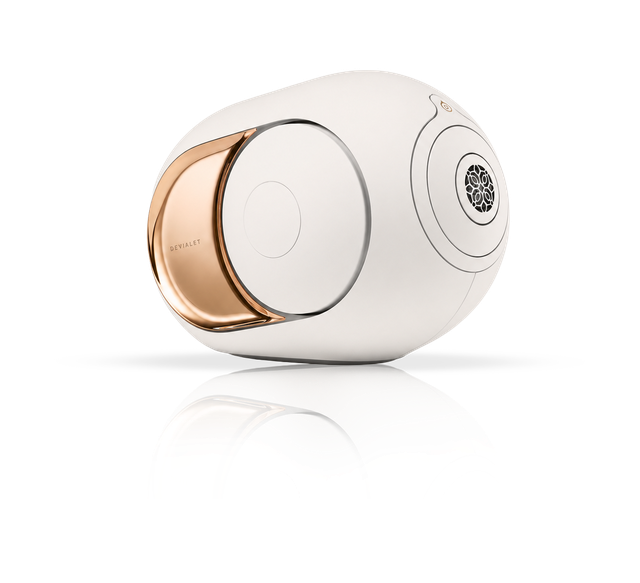

Devialet Phantom Speaker: Compact Design, Uncompromising Sound
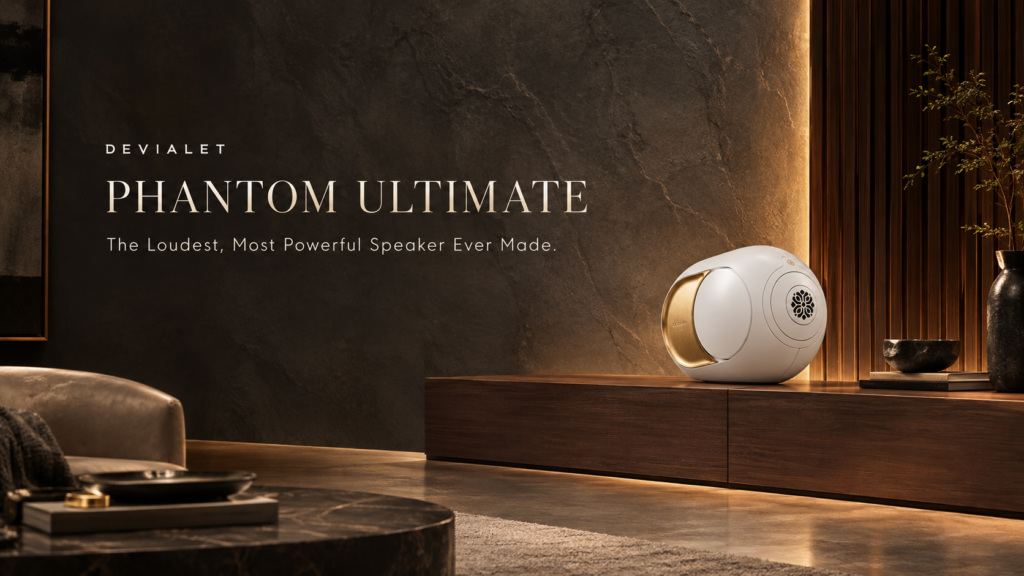
A 14Hz bass response from a sphere barely larger than a bowling ball. That is the engineering anomaly you face the moment you plug in a Devialet Phantom Speaker. It produces physical sound pressure that bypasses your ears and hits your chest, doing so without an external subwoofer.
When the original Phantom arrived in 2015, it shattered the notion that big bass required a big box. According to a 2026 review by AV NIRVANA, Devialet’s current Ultimate lineup pushes this acoustic boundary even further, packing 1,100 watts of amplification into a cast-aluminum frame that weighs roughly 30 pounds. You can browse our current range of high-end audio solutions at Sera Casdim to see how this speaker fits into modern luxury interiors.
What exactly is a Devialet Phantom Speaker?
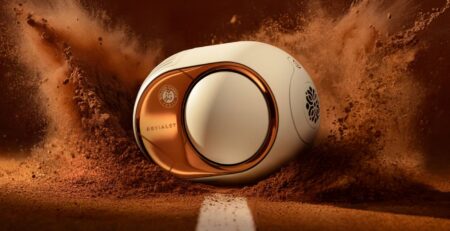
A Devialet Phantom Speaker is a fully active, ultra-compact wireless loudspeaker that replaces traditional box enclosures with a spherical design to eliminate standing waves. It delivers an implosive soundstage and deep, physical bass through proprietary hybrid amplification and digital signal processing.
This is not a conventional driver mounted on a wooden box. The Phantom relies on two opposing side-firing bass drivers that push outward simultaneously. When you play a track with a heavy low end, those drivers move with massive excursion, creating that unmistakable “dancing” appearance the speaker is famous for.
The evolution of implosive sound
Standard speakers push sound outward from a box. The Devialet Phantom Speaker creates what the manufacturer calls “implosive sound.” Instead of projecting sound waves away from the cabinet, the dual woofers push air inward toward the center of the sphere. This pressurizes the internal air mass rapidly, resulting in a denser, more physical sound. The result is a highly controlled acoustic output that minimizes cabinet resonance. You feel the bass physically, even at low volumes.
Key acoustic technologies: SAM and ADH
The brains behind this system are ADH (Analog Digital Hybrid) Intelligence and SAM (Speaker Active Matching) technology. ADH combines the precision of digital amplification with the power of analog amplification, yielding 1,100 watts of power with zero distortion at maximum volume. SAM works differently. It mathematically models the exact excursion of the speaker drivers, ensuring the air pressure produced by the speaker perfectly matches the original recording. If a drum beat moves a specific amount of air in the studio, SAM ensures the Phantom moves that exact amount of air in your living room.
How does the Devialet Phantom compare to traditional wireless speakers for home use?
Unlike a traditional wireless speaker for home use that relies on passive drivers and separate enclosures, the Phantom integrates 1,100 watts of hybrid amplification directly into a cast-aluminum sphere. It produces 108 dB of maximum sound pressure with zero distortion, outperforming most bookshelf speakers that take up twice the physical space.
Traditional wireless speakers often struggle with cabinet resonance. You turn the volume up, and the wooden or plastic housing vibrates, muddying the midrange. The Phantom eliminates this problem entirely. Its rounded aluminum body acts as a natural heat sink while reducing external vibrations. You can place it on a desk or a stand without worrying about sympathetic vibrations ruining the audio fidelity.
Zero distortion at maximum volume
Most active speakers distort as they approach their volume limits. The Devialet Phantom Speaker maintains zero distortion at peak SPL. According to Amazon product specifications for the Phantom I 108dB, the speaker pushes 1,100 watts of output power while maintaining a 27,000 Hertz frequency response. You can push the volume to maximum without a hint of audio compression or driver rattle. The sound stays clean, clear, and violently precise.
The advantage of an implosive soundstage in small rooms
Small acoustic spaces are notoriously difficult for large speakers. Standing waves build up in corners, creating boominess that ruins the listening experience. The Phantom’s spherical design breaks these acoustic rules. By radiating sound from opposing woofers in a perfect sphere, it prevents the concentrated energy build-up that plagues traditional rectangular boxes. This makes it the ideal premium audio speaker for living room setups where floor space is tight, but acoustic expectations are high.
Is the Devialet Phantom the best compact speaker in India for audiophiles?
For audiophiles in India, the Phantom series stands out because it condenses high-end hi-fi performance into a footprint that fits on a coffee table. It delivers a frequency response extending down to 14Hz on the Ultimate models, producing bass that traditional compact bookshelf speakers physically cannot generate.
Finding the best compact speaker India has to offer often involves compromising on low-end response. You simply do not get 14Hz bass from a small enclosure. The Phantom breaks this rule through its sheer acoustic density and SAM technology. According to Devialet’s official specifications for the Phantom I 103 dB, the speaker hits a 16Hz to 25kHz frequency range with 500 Watts RMS. The Phantom Ultimate pushes that boundary to 14Hz. That is sub-bass you feel rather than hear.
Understanding the distinct dB tiers (98 dB vs 108 dB)
You choose between two primary tiers in the current lineup: the 98 dB and the 108 dB. The 98 dB hits a max sound pressure level of 98 decibels, pushing 750 watts of power. It fits smaller rooms perfectly. The 108 dB ramps the power up to 1,100 watts, hitting 108 decibels of max SPL. The latter is for larger spaces where you want concert-level volume. Both share the exact same spherical DNA, opposing woofers, and digital processing.
Why size doesn’t dictate acoustic performance
Acoustic performance relies on air pressure and driver excursion, not cabinet volume. Because the Phantom uses opposing side-firing woofers in a pressurized sphere, it moves the same amount of air as a much larger traditional floorstanding speaker. You get the physical impact of a 15-inch subwoofer in an enclosure that measures just 252 mm in width on the Phantom I model.
Why is the Phantom considered a premium audio speaker for living rooms?
The Phantom earns its premium status by merging high-fidelity acoustic engineering with industrial design that doubles as visual art. It replaces the clutter of separates—amplifiers, DACs, and subwoofers—with a single, sculptural object that streams high-resolution audio over Wi-Fi.
A living room demands both acoustic performance and visual harmony. Box speakers require racks to house amplifiers, creating a tangle of cables. The Phantom houses its DAC, amplifier, and drivers inside a single cast-aluminum sphere. It stands alone on the floor or mounts to a wall. It is an object of industrial art that happens to produce studio-grade audio.
Integration with high-end home theater setups
Integrating a Devialet Phantom Speaker into a high-end home theater creates a distinct acoustic advantage. Because the system handles its own digital processing, you can pair two Phantoms in a stereo configuration without worrying about external amplification. To understand how this pairs with other luxury setups, look at the Bang and Olufsen BEOLAB 50, which shares a similar philosophy of active, wireless hi-fi integration. With the Phantom, you run a direct digital signal to the speaker, letting its internal ARM Cortex-A9 1.25GHz processor handle the conversion. This bypasses the coloration of external AV receivers.
Aesthetic appeal and visual engineering
The spherical design is not an accident. According to a 2026 review by the SoundStage! Network, the cast-aluminum frame reduces vibrations and resonances while acting as a natural heat sink. The polished stainless steel sides and driver domes create a stark, modern silhouette. It disappears visually when the music plays, drawing attention entirely to the sound rather than the hardware.
How much does a Devialet Phantom Speaker cost in India?
A single Devialet Phantom Speaker ranges from $1,999 for the Ultimate 98 dB model up to $3,999 for the Ultimate 108 dB, with legacy models like the Phantom I 108dB sitting at $3,399. In India, these prices convert to premium luxury audio brackets, factoring in import duties and authorized dealer margins.
Pricing scales directly with acoustic output. The Ultimate 98 dB retails for $1,999. The step-up 108 dB model doubles the price to $3,999. Devialet also offers the gold leaf Opera de Paris finish, which adds a significant premium for the hand-adorned detailing. According to Amazon, the Phantom I 108dB retails for $3,399, indicating a tiered pricing structure based on output and finish. To get exact, real-time pricing for the Indian market you can contact us directly.
Pricing variations across Phantom I and Phantom Ultimate ranges
The legacy Phantom I series sits between the current Ultimate models. The Phantom I 103 dB retails for $2,399. The new Ultimate range splits the difference, with the 98 dB targeting entry-level luxury and the 108 dB serving as the flagship. You pay for sound pressure level, not for features. Both models include AirPlay, Spotify Connect, Tidal Connect, and Roon Ready compatibility out of the box.
Where to buy an authorized unit
You must buy authorized units to receive the two-year manufacturer warranty and ensure the firmware supports local streaming protocols. Unauthorized grey-market imports often lack the correct power supply calibrations for 100-240V ~ 50/60Hz grids. You should only purchase through certified high-end audio retailers.
Is Devialet better than Bose for home audio?
Devialet focuses on zero-distortion, high-SPL active hi-fi engineering, while Bose targets mass-market acoustic comfort and lifestyle convenience. Devialet produces physical, sub-14Hz bass at concert volumes, whereas Bose prioritizes psychoacoustic processing to simulate wide soundstages at lower volumes.
These brands target different buyers. Bose builds excellent lifestyle speakers that sound good everywhere and require zero acoustic setup. Devialet builds a singular acoustic instrument. The Phantom uses 1,100 watts of hybrid amplification and opposing woofers to move physical air. If you want a speaker that disappears into the background while playing background music, Bose fits the bill. If you want a speaker that hits you in the chest with a 14Hz bassline and maintains zero distortion at maximum volume, Devialet wins outright.
A comparison of acoustic engineering philosophies
Bose relies heavily on psychoacoustics—tricking the brain into perceiving bass and width that the drivers physically cannot produce. Devialet relies on brute force and mathematical precision. SAM technology ensures the driver excursion matches the exact air pressure of the original recording. ADH amplification combines Class A analog warmth with Class D efficiency. Devialet does not simulate bass. It generates it.
Target audiences for both brands
Bose targets consumers who want good sound without thinking about it. The setup is foolproof. The pricing is accessible. Devialet targets audiophiles and design enthusiasts who want uncompromised fidelity and visual sculpture. The entry price is steep. The acoustic return justifies it. See how our community integrates these systems by following Sera Casdim on Facebook, where we regularly post setup showcases.
Key Takeaways
- The Devialet Phantom Speaker delivers an implosive soundstage and 14Hz bass from a compact spherical design.
- Proprietary ADH and SAM technologies ensure zero distortion at maximum volume, replacing traditional amplifiers.
- It ranks as the best compact speaker in India for audiophiles seeking uncompromising physical bass performance.
- The Phantom serves as a premium audio speaker for living rooms, doubling as a sculptural piece of industrial art.
Comparison
| Model | Max SPL | Power Output | Frequency Response |
|---|---|---|---|
| Phantom Ultimate 98 dB | 98 dB | 750 Watts | Down to 14Hz |
| Phantom Ultimate 108 dB | 108 dB | 1,100 Watts | Down to 14Hz |
| Phantom I 103 dB | 103 dB | 500 Watts RMS | 16Hz – 25kHz |
| Phantom I 108 dB | 108 dB | 1,100 Watts | 27,000 Hz limit |
Frequently Asked Questions
1. What is Devialet known for?
Devialet is known for inventing ADH Intelligence and SAM technology, enabling its Phantom speakers to produce zero distortion at maximum volume. The brand pioneered the implosive soundstage, using spherical enclosures and opposing woofers to deliver physical sub-bass from a compact, ultra-premium form factor.
2. Which is the best Bluetooth speaker in India?
For luxury listening, the Devialet Phantom Ultimate ranks as the best compact speaker India offers, thanks to its 14Hz bass response and massive power. While brands like Bose provide accessible alternatives for casual listening, they lack the Phantom’s zero-distortion acoustic engineering and implosive soundstage.
3. How much is the Devialet Phantom?
The Devialet Phantom Ultimate 98 dB costs $1,999, while the flagship 108 dB model is priced at $3,999. Legacy models like the Phantom I 103 dB retail for $2,399. In India, expect premium pricing due to import duties, with exact costs varying by authorized dealer margins and specific model availability.
4. Is Devialet better than Bose?
Devialet outperforms Bose in raw acoustic metrics, offering deeper bass extension, higher maximum sound pressure levels, and zero distortion. Bose remains superior in mass-market convenience and accessible pricing. Devialet targets high-end audiophiles, while Bose focuses on lifestyle consumers seeking psychoacoustic processing.
Does the Devialet Phantom Speaker need a separate subwoofer?
No, the Devialet Phantom Speaker does not need a separate subwoofer. Its opposing side-firing woofers and proprietary SAM technology generate frequency responses extending down to 14Hz. This produces physical bass impact that surpasses most external subwoofers, eliminating the need for additional bulky audio equipment.


Leave a Reply