

“Music can either make you remember everything or forget everything.”

LOADING… 0

Blog

Bang & Olufsen Beolab 50

Bang & Olufsen Beolab 50: Sculptural Sound for the Modern Living Room

A pair of high-end active loudspeakers rarely comes cheap. When you spend upward of $40,000 on audio equipment, you usually have to budget another $10,000 to $20,000 for external amplification and digital-to-analog converters. The Bang & Olufsen Beolab 50 eliminates that hidden cost by handling all amplification and D/A conversion on board. It is a sculptural, high-end active loudspeaker designed to deliver powerful, room-adaptive audio for the modern living room, blending timeless aesthetic design with uncompromising acoustic performance.

What Is the Bang & Olufsen Beolab 50?

The Bang & Olufsen Beolab 50 is a high-end powered speaker that blends best-in-class audio technology with graceful aesthetics. It provides uncompromising sound quality and absolute versatility for audiophiles who expect something truly extraordinary from a luxury floor standing speaker.

You do not buy the Bang & Olufsen Beolab 50 if you just want background noise. You buy it because your living room dictates both a visual statement and a sonic fortress. According to Andrew Robinson, who reviewed the speakers in an October 2025 video, the Beolab 50 is "the speaker I've been waiting for." His testing process included connecting the speakers to a Beosound Theatre and Bang & Olufsen Beoconnect Core, pushing them with tracks from Fiona Apple and Tool to evaluate their dynamic range.

A Sculptural Sound Solution for the Modern Living Room

The visual design of the Bang & Olufsen Beolab 50 rejects the traditional monolithic black box. Instead, it offers a striking silhouette that immediately draws the eye. The top of the cabinet features an acoustic lens that physically deploys when the speaker powers on, a mechanical movement that signals the start of a listening session. It functions as a piece of functional art when not in use, integrating into modern interior design without looking like a piece of recording studio equipment.

Key Design and Acoustic Engineering Features

The engineering of the Bang & Olufsen Beolab 50 focuses on precise driver integration and active amplification.

  • Acoustic Lens Technology: The top-mounted lens deploys physically to control high-frequency dispersion.
  • Active Speaker Design: Built-in amplification and D/A conversion eliminate the need for external amps.
  • Custom Finishes: Users can select from natural aluminum, black anthracite, and various wood side panels.

Because the Bang & Olufsen Beolab 50 handles its own digital signal processing, it maintains strict control over the drivers. This ensures that the sound reaching your ears matches the sound the engineers intended, rather than being altered by third-party amplifiers or inferior cables.

How Does Adaptive Bass Linearisation Work in the Beolab 50?

Adaptive bass linearisation works by continuously monitoring the low-frequency output and adjusting the DSP engine to prevent driver distortion at high volumes. This specific technology, known as an adaptive bass linearisation speaker system, ensures the woofers move accurately even when the audio demands sudden, intense bursts of deep bass.

The Bang & Olufsen Beolab 50 relies on a custom DSP engine to manage this heavy lifting. When you push the volume up, the internal software instantly calculates the physical limits of the drivers. It adjusts the bass response in real-time to keep the sound clean. You get the full weight of a bass drop without the mechanical rattling or distortion that plagues standard passive speakers.

Understanding the Custom DSP Engine

Digital signal processing sits at the heart of the Bang & Olufsen Beolab 50. The DSP engine manages everything from crossover points to phase alignment and time correction. According to a discussion on the Audio Science Review forum, the active nature of these speakers means they handle D/A conversion internally. This integrated approach allows the DSP to correct physical driver anomalies before the signal ever reaches the amplifiers. The result is a tightly controlled soundstage that remains stable across different volume levels.

The Role of Active Room Compensation

Even the best speaker sounds terrible in a poorly treated room. Hard walls, glass windows, and bare floors create standing waves that ruin low-frequency response. The Bang & Olufsen Beolab 50 tackles this with Active Room Compensation.

This feature measures the acoustic properties of your specific room. It then alters the speaker's output to counteract the negative effects of your environment. If you move the Bang & Olufsen Beolab 50 closer to a wall, the system detects the resulting bass boost and flattens the response curve. The speaker adapts to the space, rather than forcing you to rearrange your furniture.

Why Is Bang & Olufsen Considered a Luxury Floor Standing Speaker?

Bang & Olufsen earns its luxury status through meticulous material selection, high-end acoustic engineering, and a design language that prioritizes visual permanence. The Bang & Olufsen Beolab 50 exemplifies this approach by combining raw acoustic power with mindfully selected materials that create a statement piece for any audiophile space.

A luxury floor standing speaker must do more than just play loud. It needs to look like a permanent, intentional fixture in a high-end home. The Bang & Olufsen Beolab 50 achieves this by offering a modular aesthetic that buyers can customize. You choose the visual identity of the speaker to match your interior, ensuring it never looks out of place.

Premium Materials: Natural Aluminum, Oak Wood, and Fabric

The construction of the Bang & Olufsen Beolab 50 relies on premium, durable materials. The primary cabinet structure uses natural aluminum, which provides a rigid acoustic enclosure that resists vibration. The side panels offer a choice of wood finishes, including dark smoked oak, which adds warmth to the otherwise industrial metal exterior. The front cover consists of a tight fabric that hides the internal drivers while allowing sound to pass through unimpeded. According to the manufacturer, this combination of aluminum, oak wood, and fabric creates a timeless design that fits seamlessly into modern living rooms.

Comparing the Beolab 50 to the Flagship Beolab 90

The Bang & Olufsen Beolab 50 borrows heavily from the flagship Beolab 90. According to a user on the Audio Science Review forum who had heard both, the Beolab 90 received excellent reviews, and the 50 incorporates many of those trickled-down technologies.

However, the Beolab 50 scales the concept down. The Beolab 90 serves as the ultimate, no-compromise reference speaker, utilizing more drivers and a larger cabinet to push even higher sound pressure levels. The Bang & Olufsen Beolab 50 takes the core concepts of active room compensation and acoustic lens technology and packages them into a more manageable footprint for a standard living room. It delivers 80% of the flagship's performance in a form factor that actually fits in a home.

What Is the Beolab 50 Price in India and Global Markets?

The Bang & Olufsen Beolab 50 carries a premium price tag that reflects its active amplification, custom DSP, and luxury build. In European markets, the Bang & Olufsen website lists the speakers at €62,300 per set. For buyers in India, the Beolab 50 price India falls into the ultra-premium audiophile tier, with specialized retailers like Ooberpad listing the floorstanding speaker for import.

Pricing for the Bang & Olufsen Beolab 50 changes based on the specific finishes and wood panels you select. Because it includes all necessary amplification and digital-to-analog conversion, the sticker price represents your total system cost. You do not need to buy a separate preamp or power amplifier to reach peak performance.

Understanding the Premium Pricing of Bang & Olufsen

Why is Bang & Olufsen so expensive? The cost stems from the research and development required to integrate complex digital signal processing with bespoke acoustic hardware. A user on the Audio Science Review forum pointed out that people who buy $40,000 speakers usually spend another $10,000 to $20,000 on external amplification, DACs, and high-end cables. The Bang & Olufsen Beolab 50 bundles all of this into the cabinet. You are paying for a complete, self-contained audio system that has been tuned at the factory, rather than a single component that requires further investment to function.

Is Bang & Olufsen Better Than Bose for High-End Audio?

Is Bang & Olufsen better than Bose? For high-end, dedicated listening rooms, the Bang & Olufsen Beolab 50 easily outperforms Bose. Bose excels at mass-market convenience, lifestyle soundbars, and noise-canceling headphones. The Bang & Olufsen Beolab 50 targets a completely different consumer. It provides a discrete, two-channel stereo experience with active room compensation and acoustic lens technology that Bose simply does not offer in its product lineup. If you want a lifestyle speaker for casual TV viewing, Bose serves the purpose. If you want a sculptural sound solution that reveals the exact placement of every instrument in a mix, the Bang & Olufsen Beolab 50 wins outright.

How Does the Beolab 50 Perform in a Real Listening Room?

In a real listening room, the Bang & Olufsen Beolab 50 produces a wide, stable stereo image that remains consistent even when you stand up or move to the side. The acoustic lens technology controls high-frequency dispersion, preventing harsh reflections from nearby walls and ensuring the sound reaches the listener with pinpoint accuracy.

Andrew Robinson noted in his 2025 review that the speakers excel at low-volume listening. Many high-end speakers only sound alive when pushed to high decibel levels. The Bang & Olufsen Beolab 50 utilizes its adaptive DSP to maintain bass response and detail even at background volumes. You hear the full mix without shaking the walls.

Stereo Imaging and Acoustic Lens Dispersion

The Acoustic Lens Technology on the Bang & Olufsen Beolab 50 physically alters how high frequencies leave the cabinet. When the lens deploys, it spreads the high frequencies horizontally across the room rather than beaming them straight forward. This creates a much wider sweet spot. You do not have to sit perfectly centered between the two speakers to hear a balanced mix. The soundstage extends beyond the physical boundaries of the speakers, making the room feel larger than it is.

Integration with Modern Home Theater Setups

The Bang & Olufsen Beolab 50 functions brilliantly in a modern home theater. Robinson tested the speakers alongside a Beosound Theatre, using them as front left and right channels. Because they are active speakers, they connect directly to the source via digital inputs, bypassing the need for a traditional AV receiver's amplification stage. The Bang & Olufsen Beolab 50 handles the heavy dynamic demands of movie soundtracks effortlessly, delivering deep bass impacts and crisp dialogue with equal clarity.

Is the Bang & Olufsen Beolab 50 the Right Investment for Your Home?

The Bang & Olufsen Beolab 50 is the right investment if you want a complete, self-contained audio system that doubles as a piece of modern art. It eliminates the need for external amplifiers, DACs, and complex cable management, making it ideal for buyers who want flagship sound without dedicating an entire room to rack-mounted audio gear.

You should buy the Bang & Olufsen Beolab 50 if you value both acoustic accuracy and industrial design. The Active Room Compensation ensures the speaker sounds excellent regardless of your room's dimensions, and the adaptive bass linearisation keeps the low end tight and controlled. It is a speaker for someone who wants to hear the music exactly as recorded, without compromising the visual aesthetic of their living space.

Who Should Buy the Beolab 50?

The ideal buyer for the Bang & Olufsen Beolab 50 is an audiophile who has outgrown traditional passive speaker setups. If you are tired of matching amplifiers, experimenting with different DACs, and dealing with heavy speaker cables, this active system solves those problems. It also appeals to interior design enthusiasts who refuse to place large, black monolithic boxes in their living rooms. The customizable aluminum and oak wood finishes allow the speaker to blend into high-end architecture.

Alternative High-End Speakers to Consider

If the Bang & Olufsen Beolab 50 does not fit your specific needs, consider a few alternatives. The flagship Beolab 90 offers even greater dynamic range and driver count for a higher price. If you prefer traditional passive speakers, the Wilson Watt/Puppy or the Arendal 1528 Tower provide massive sound but require massive external amplification. Finally, if you want a smaller active speaker for a tighter space, the Bang & Olufsen Beolab 28 offers similar smart features in a more compact form factor.

The Bang & Olufsen Beolab 50 stands as a unique intersection of engineering and art. If you are ready to elevate your listening room with a sculptural sound solution, the Sera Casdim team is here to help you configure the perfect set.

Key Takeaways

  • The Bang & Olufsen Beolab 50 is an active loudspeaker that eliminates the need for external amplifiers or DACs.
  • Adaptive bass linearisation and Active Room Compensation adjust the sound to fit your specific room and volume levels.
  • The sculptural design features customizable natural aluminum and oak wood side panels to match modern interiors.
  • The Beolab 50 delivers roughly 80% of the flagship Beolab 90's performance in a more manageable footprint.

Comparison

FeatureBang & Olufsen Beolab 50Bang & Olufsen Beolab 90
Speaker TypeActive floor standing speakerFlagship active reference speaker
AmplificationBuilt-in amplification and D/A conversionBuilt-in amplification and D/A conversion
Key TechnologyAcoustic Lens Technology, Active Room CompensationActive Room Compensation, larger driver array
Cabinet DesignNatural aluminum with smoked oak wood panelsLarger cabinet for higher sound pressure levels
Ideal EnvironmentStandard modern living roomsDedicated, no-compromise listening spaces

Frequently Asked Questions

1. What is the price of the B&O Beolab 50?
The Bang & Olufsen Beolab 50 carries a premium price tag reflecting its active amplification and luxury build. In European markets, the manufacturer lists the speakers at €62,300 per set. For buyers in India, the Beolab 50 price India falls into the ultra-premium audiophile tier through specialized import retailers.

2. Why is Bang Olufsen so expensive?
The cost stems from integrating complex digital signal processing with bespoke acoustic hardware. Traditional high-end setups require separate external amplifiers and DACs, but the Beolab 50 bundles this technology inside the cabinet. You are paying for a complete, factory-tuned audio system rather than a single passive component.

3. Is Bang & Olufsen better than Bose?

For dedicated high-end listening rooms, Bang & Olufsen easily outperforms Bose. While Bose excels at mass-market convenience and lifestyle soundbars, the Beolab 50 provides a discrete two-channel stereo experience with active room compensation and acoustic lens technology that Bose simply does not offer.

4. How does adaptive bass linearisation work in the Beolab 50?

Adaptive bass linearisation continuously monitors low-frequency output and adjusts the custom DSP engine to prevent driver distortion at high volumes. This ensures the woofers move accurately during sudden, intense bursts of deep bass, maintaining a clean sound without the mechanical rattling that plagues standard passive speakers.

5. What makes the Beolab 50 a luxury floor standing speaker?
The Beolab 50 earns its luxury status through meticulous material selection, including natural aluminum, smoked oak wood, and tight fabric. It functions as a visual statement piece and a sonic fortress. The customizable design ensures it looks like an intentional, permanent fixture in a high-end living room rather than recording studio equipment.
Read more...
Bang & Olufsen Beolab 90

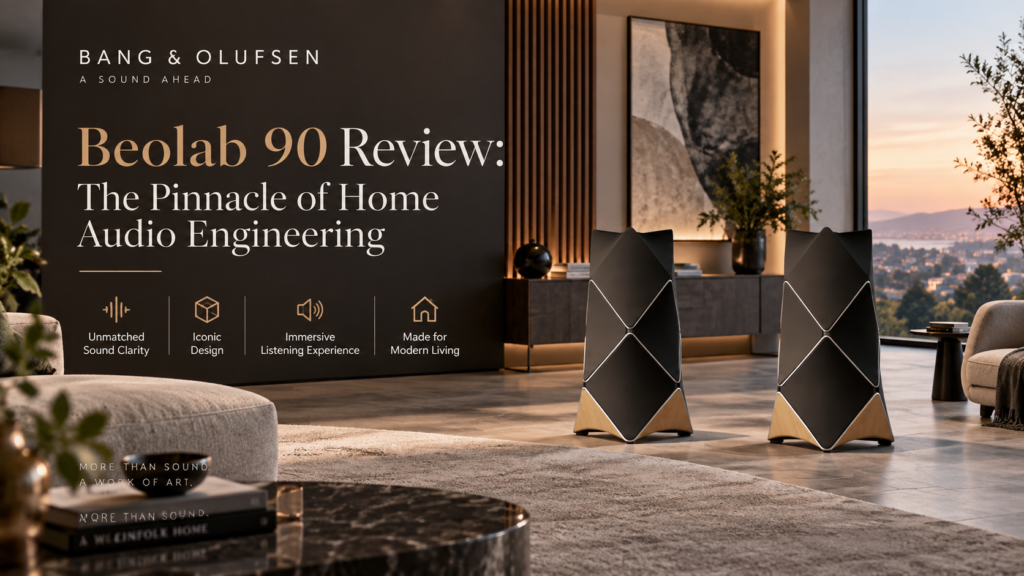
Bang & Olufsen Beolab 90 Review: The Pinnacle of Home Audio Engineering

A 6.5-inch woofer hidden inside a sculpted aluminum column might seem impossible until you hear it. Priced from $21,200 per pair, the Bang & Olufsen Beolab 28 bridges the gap between architectural minimalism and serious full-range audio. Most luxury speakers force you to choose between aesthetics and acoustic performance; this model attempts to hand you both.

For the team at Sera Casdim, the Bang & Olufsen Beolab 28 represents a specific shift in high-end residential audio. It moves the conversation away from bulky wooden cabinets toward active, wireless systems that genuinely integrate into modern domestic architecture.

What Makes the Bang & Olufsen Beolab 28 a Top-Tier Wireless Speaker?

The Bang & Olufsen Beolab 28 earns its top-tier status by combining a dedicated down-firing woofer, advanced acoustic lens technology, and the Mozart platform into a single wireless column. It delivers full-range sound without requiring an external subwoofer, solving a problem that plagued its predecessors.

The Philosophy Behind the Acoustic Design

Previous iterations of B&O column speakers, notably the Beolab 18, lacked the physical cabinet space to move enough air for believable low-frequency response. Audiophiles often compensated by adding a separate subwoofer. As noted in a demonstration by Bang & Olufsen of Birmingham, adding a separate subwoofer historically disrupted the cohesive setup that music lovers desired. The Bang & Olufsen Beolab 28 fixes this by integrating a dedicated woofer at the base, producing tight, integrated bass straight out of the box.

This integration stems from a deliberate design philosophy. B&O wanted a speaker that takes up minimal floor space but provides a broad, room-filling soundstage. According to Definitive Audio, the Bang & Olufsen Beolab 28 allows users to narrow the wooden grilles for a focused listening sweet spot or open them wide for movies and social gatherings. That directional control separates it from standard hi-fi towers.

Integration of Digital and Mechanical Engineering

Inside the Bang & Olufsen Beolab 28, digital signal processing constantly manages the drivers. The active crossover ensures the tweeter, midrange, and woofer receive precisely tailored frequencies. The acoustic lens technology handles the high-frequency dispersion. By shaping the physical lens around the tweeter, the engineers guarantee that higher frequencies project evenly across the listening area rather than beaming straight forward.

Because the amplification lives inside the cabinet, the signal path stays entirely digital from the source to the drivers. This removes the need for external speaker cables and power-hungry amplifiers. The result of this mechanical and digital marriage is a column speaker that behaves like a focused studio monitor but functions as a whole-home audio solution.

Is the Beolab 28 the Best Speaker for a Large Living Room?

Yes, the Bang & Olufsen Beolab 28 qualifies as the best speaker for a large living room if your priorities involve open-concept architecture and eliminating unsightly audio clutter. It handles spatial audio distribution effectively through integrated room compensation software, forcing sound into the room rather than letting it bounce blindly off the nearest wall.

Active Room Compensation and Spatial Sound

Acoustic treatment in large residential spaces presents a massive challenge. Hard surfaces, vaulted ceilings, and glass walls reflect audio unevenly. The Bang & Olufsen Beolab 28 features Active Room Compensation to measure and correct these anomalies. By analyzing the room's acoustics, the speaker adjusts its output to minimize the negative impact of nearby walls. You can place the speaker in a corner, and the DSP will tune the bass response so it does not sound muddy or boomy. This level of spatial adaptation is critical for spacious layouts where traditional passive speakers fail to image correctly.

Filling the Space Without Overwhelming the Decor

Standard floorstanding speakers demand significant floor area and create visual clutter. A large living room requires sound that reaches every seating position, but you cannot simply place massive box speakers in the middle of an open floor plan without ruining the aesthetic. According to the manufacturer, the Bang & Olufsen Beolab 28 provides "powerful, studio-quality sound that adapts to your room" within an elegant, slender form. By using a tall, narrow footprint, it disrupts sightlines far less than traditional tower speakers. It fills the acoustic void perfectly.

How Does the Beolab 28 Function as a Slim Luxury Floorstanding Speaker?

The Bang & Olufsen Beolab 28 operates as a slim luxury floorstanding speaker by housing its drivers vertically within a narrow cylindrical cabinet wrapped in interchangeable materials. This architectural approach allows it to occupy minimal square footage while projecting expansive stereo soundscapes, effectively acting as functional decor rather than an intrusive audio box.

Material Choices: Natural Aluminum, Oak, and Fabric

The cabinet exterior directly dictates how the speaker interacts with a room's visual identity. The Bang & Olufsen Beolab 28 utilizes natural aluminum for its core structure, paired with interchangeable covers in light oak, smoked oak, walnut, or grey fabric. You can swap these outer covers to match changing interior design trends without replacing the speaker. This modularity ensures the speaker looks at home alongside warm wood paneling or cool minimalist concrete. Sera Casdim recognizes this material flexibility as a primary reason clients with dedicated interior architects choose this system.

Floor-Standing and Wall-Mounted Configurations

Flexibility in placement is rare among tower speakers. The Bang & Olufsen Beolab 28 functions as a floor-standing unit on a dedicated base, but it also includes a dedicated wall mount bracket. This allows the columns to hover alongside a mounted television or architectural column. If you move homes or redesign the space, the speakers transition from floor to wall without purchasing new hardware. Sera Casdim notes that this dual-mounting ability solves the dilemma for homeowners who want elevated sound without floor-standing footprints.

Which Is Better: The Beolab 28 or the KEF LS60?

The Bang & Olufsen Beolab 28 is better for buyers who prioritize modular aesthetics, directional sound control, and design flexibility, while the KEF LS60 Wireless is better for listeners who want a slightly warmer, traditional hi-fi sound profile with massive bottom-end weight. The choice ultimately depends on whether you value architectural integration or sheer acoustic output.

Comparing Acoustic Delivery and Sound Staging

Both systems rely on active wireless technology, but their acoustic approaches differ. The LS60 uses KEF's Uni-Core technology, stacking drivers to create a broad, unified soundstage with immense bass depth. The Bang & Olufsen Beolab 28 relies on Acoustic Lens Technology to manipulate high-frequency dispersion. It offers a narrower, more focused sweet spot when desired, which the LS60 does not easily replicate. According to Steve from Sounds Heavenly, speaking with Bang & Olufsen of Birmingham, the Bang & Olufsen Beolab 28 captures details down to "the breath of the artist," providing a level of vocal clarity that stands up to traditional audiophile setups.

Aesthetic Differences and Smart Feature Integrations

Visually, the KEF LS60 presents a wide, heavy rectangular cabinet designed to sit firmly on the floor. The Bang & Olufsen Beolab 28 presents a slender, architectural column. B&O's integration of the Mozart platform allows the Bang & Olufsen Beolab 28 to integrate flawlessly with existing B&O televisions and multi-room systems using Beoconnect Core. The KEF system integrates well with standard streaming protocols but lacks the native ease of integration found within the B&O ecosystem.

Why Is Bang & Olufsen Considered a Luxury Audio Brand?

Bang & Olufsen is considered a luxury audio brand because it couples proprietary acoustic engineering with uncompromising Scandinavian industrial design, ensuring every product serves as a functional piece of architectural decor rather than a standard electronic device. The brand produces audio equipment that explicitly targets the high-end architectural and interior design markets.

Heritage of Scandinavian Design and Craftsmanship

For nearly a century, B&O has collaborated with leading industrial designers to create audio equipment that breaks the traditional rectangular mold. The Bang & Olufsen Beolab 28 continues this heritage. By utilizing natural aluminum and real wood veneers, B&O insists on materials that age gracefully. The speakers look less like mass-market electronics and more like commissioned furniture pieces. This dedication to craftsmanship justifies the premium pricing model. You pay for the acoustic engineering and the material refinement.

Justifying the Investment in Premium Floorstanding Speakers

Priced at $21,200 for a pair, the Bang & Olufsen Beolab 28 represents a serious financial commitment. However, the investment makes sense when you factor the cost of separate amplification, acoustic treatment, and interior design consultation into traditional hi-fi setups. Standard high-end passive speakers require massive external amplifiers that generate heat and demand dedicated equipment racks. The Bang & Olufsen Beolab 28 contains all amplification internally. It bypasses the need for external hardware, reducing cable clutter and installation complexity.

Can You Provide a Detailed Review of the Beolab 28's Performance?

A detailed review of the Bang & Olufsen Beolab 28's performance reveals a speaker that resolves low frequencies with unexpected authority while maintaining pristine, breath-catching vocal clarity in the mid and high registers. It performs exactly like a full-range audiophile column should, defying its narrow proportions.

Bass Response and Low-Frequency Handling

Earlier B&O column speakers lacked serious bass. The Bang & Olufsen Beolab 28 fixes this by introducing a separate woofer at the base. During evaluations, this integrated driver produces low frequencies that you feel rather than just hear. Active Room Compensation ensures the bass does not overpower the room or cause room nodes to pile up in the corners. By keeping the bass tightly integrated within the column itself, the speaker avoids the disconnected feeling that plagues systems relying on separate subs.

Mid-Range Clarity and High-Frequency Dispersion

The mid-range dictates how realistic vocals and instruments sound. The Bang & Olufsen Beolab 28 reproduces vocals with startling accuracy. The acoustic lens technology manages the high frequencies, widening the sweet spot so the soundstage does not collapse when you stand up or move to another seat. This wide dispersion makes the system exceptionally effective for home cinema use, where listeners occupy multiple seating positions across a room.

Where Can You Buy a Premium Floorstanding Speaker in India?

You can acquire a premium floorstanding speaker in India through authorized high-end audio dealers and luxury electronics boutiques located in major metropolitan areas. The Indian market for luxury audio has expanded heavily, with dedicated spaces offering private listening rooms for high-fidelity demonstrations.

Availability of High-End Audio Solutions in the Indian Market

Dealerships in Mumbai, Delhi, and Bangalore regularly stock Bang & Olufsen products. The Bang & Olufsen Beolab 28 represents the exact type of premium floorstanding speaker India seeks for modern luxury apartments and villas. These dealers provide custom installation services, ensuring the wireless architecture integrates cleanly with existing smart home systems. You will not find this tier of equipment in standard electronics megastores. High-end audio requires dedicated acoustic environments to properly audition the speakers before purchase.

What to Consider When Purchasing Luxury Audio Equipment

Before buying a system like the Bang & Olufsen Beolab 28, evaluate your room acoustics, wireless network stability, and spatial layout. Luxury active speakers rely heavily on a stable network for high-resolution streaming. Consider how the speaker's aluminum and oak finishes will complement your existing furniture. Most importantly, arrange a private listening session at an authorized boutique. You need to hear how the Active Room Compensation and acoustic lens technology translate to your specific musical preferences before committing to the investment.

Why Is Bang & Olufsen So Expensive?

Bang & Olufsen commands high prices because the brand invests heavily in proprietary acoustic research, bespoke industrial design, and premium material engineering. Each speaker undergoes rigorous testing to meet audiophile standards while maintaining the visual aesthetic of high-end Scandinavian furniture. The cost covers the integrated amplifiers, advanced digital signal processing, and the architectural impact of the piece.

Which Is Better, the Beolab 28 or the KEF LS60?

The KEF LS60 Wireless delivers heavier, broader bass and a more traditional floorstanding footprint. The Bang & Olufsen Beolab 28 provides a slenderer profile, directional sound control, and seamless integration with B&O televisions. Choose the LS60 for pure sonic mass; choose the Bang & Olufsen Beolab 28 for architectural flexibility and detailed vocal clarity.

Is Bang & Olufsen a Luxury Brand?

Yes. Bang & Olufsen operates firmly in the luxury sector. The brand pairs high-resolution audio engineering with materials like natural aluminum, oak, and fabric, ensuring its products function as statement pieces. The Bang & Olufsen Beolab 28 serves as a prime example of this philosophy, combining elite acoustic technology with bespoke visual design.

Can You Provide a Review of the Beolab 28 Speaker?

Our review finds the Bang & Olufsen Beolab 28 highly effective for large spaces and home cinema setups. It produces deep, integrated bass without a separate subwoofer. The mid-range captures intricate vocal details, and the Acoustic Lens Technology creates a wide, room-filling soundstage. It performs exceptionally well for listeners who require both high-fidelity audio and strict architectural aesthetics.

If you are ready to integrate uncompromising audio into your living space, connect with the team at Sera Casdim today to arrange a private consultation.

Key Takeaways

  • The Beolab 28 bridges the gap between architectural minimalism and full-range audio without requiring external subwoofers.
  • Active Room Compensation analyzes your space to prevent bass from sounding muddy, making it ideal for open-concept layouts.
  • Interchangeable oak and fabric covers allow the speaker to adapt to changing interior design trends over time.
  • Compared to the KEF LS60, it offers superior vocal clarity and modular aesthetics rather than sheer acoustic mass.
  • Sera Casdim recommends it for buyers seeking a slim luxury floorstanding speaker that integrates seamlessly into smart homes.

Comparison

FeatureBang & Olufsen Beolab 28KEF LS60 Wireless
Form FactorSlender architectural columnWide, heavy rectangular cabinet
Acoustic TechnologyAcoustic Lens TechnologyUni-Core Driver Technology
Bass HandlingIntegrated down-firing wooferMassive bottom-end weight
Mounting OptionsFloor-standing or wall-mountedFloor-standing only
Ecosystem IntegrationMozart platform & Beoconnect CoreStandard streaming protocols
Best ForArchitectural flexibility & decorTraditional hi-fi sound profile

Frequently Asked Questions

  1. Why is Bang & Olufsen so expensive?
    Bang & Olufsen commands premium prices because the brand invests heavily in proprietary acoustic research, bespoke industrial design, and high-end material engineering. The cost covers integrated amplifiers, advanced digital signal processing, and the architectural impact of crafting audio equipment that functions as luxury furniture.
  2. Which is better, the Beolab 28 or the KEF LS60?
    The KEF LS60 Wireless delivers heavier bass and a traditional floorstanding footprint. The Bang & Olufsen Beolab 28 provides a slender profile, directional sound control, and seamless integration with existing architectural ecosystems. Choose the LS60 for pure sonic mass, or the Beolab 28 for design flexibility.
  3. Is Bang & Olufsen a luxury brand?
    Yes, Bang & Olufsen operates firmly in the luxury sector. The brand pairs high-resolution audio engineering with premium materials like natural aluminum, oak, and fabric. Their products function as statement pieces of architectural decor, justifying their luxury status for homeowners and interior designers seeking uncompromising aesthetics.
  4. Can you provide a review of the Beolab 28 speaker's performance?
    The Beolab 28 resolves low frequencies with unexpected authority using a dedicated down-firing woofer, while maintaining pristine vocal clarity in the mid and high registers. Active Room Compensation prevents bass from overwhelming the space, and acoustic lens technology ensures a wide, room-filling soundstage.
  5. Is the Beolab 28 the best speaker for a large living room?
    Yes, the Beolab 28 is ideal for large living rooms due to its Active Room Compensation technology. This feature measures and corrects acoustic anomalies from hard surfaces and vaulted ceilings, ensuring immersive sound reaches every seating position without requiring bulky, visually intrusive speaker cabinets.

Read more...

Can a Speaker Be the Best-Looking Object in Your Home? The Bang & Olufsen Difference

Why Buy a Bang & Olufsen Speaker? Sound, Design & Value

Most speakers ask for a compromise. Hide them and the sound may suffer. Display them and the room begins to look like an electronics store. Bang & Olufsen takes a more interesting position: what if the speaker did not interrupt the interior, but completed it?

That question explains much of the appeal behind a Bang & Olufsen speaker. B&O products are not designed as anonymous black boxes. They use proportion, material and sound as parts of the same experience. The result is audio equipment intended to be heard, touched and seen.

But beautiful design alone does not make a speaker worth owning. So, beyond the striking first impression, what actually makes a B&O speaker different—and is it the right choice for your home?

The short answer: why are Bang & Olufsen speakers different?

Bang & Olufsen speakers combine high-end sound engineering, room-aware audio technology, premium materials and furniture-like design. Selected connected models can analyse their position in a room and tune their output accordingly. Many newer models also use B&O’s modular Mozart platform, designed to support software evolution, servicing and future upgrades.

In simple terms, B&O is for someone who wants fewer compromises between sound, technology and interior design.

A speaker you do not need to hide

Traditional hi-fi culture often celebrates the machinery: visible drivers, stacked components, amplifiers and cables. That aesthetic has its audience, but it does not belong naturally in every home.

Bang & Olufsen approaches audio more like an architect or furniture designer. A circular speaker can become a visual anchor. A column can echo the vertical lines of a room. Aluminium, timber and woven textile can relate to surfaces already present in the interior.

This matters more than it may appear. A speaker performs best when it is placed thoughtfully—not squeezed into a cabinet simply because nobody wants to look at it. When the product belongs in the room visually, you are more likely to give it the space it needs acoustically.

That is the clever part of B&O design: beauty is not merely decoration. It can encourage better placement and, therefore, a better listening experience.

Your room is part of the sound system

People often compare speakers using driver counts, wattage or frequency figures. Those numbers are useful, but they leave out one enormous variable: the room.

Walls reinforce some frequencies. Soft furnishings absorb others. Glass, stone and large open areas can change the way sound reflects. Move the same speaker from a corner to the centre of a room and it may sound noticeably different.

On compatible Bang & Olufsen speakers, Active Room Compensation maps the acoustic surroundings and applies filters according to the speaker’s placement. It does not magically fix every difficult room, but it helps the speaker respond to the space in which it is actually used—not an ideal laboratory.

For modern Indian homes, that can be especially useful. An apartment living room, a double-height villa lounge and an open-plan living-and-dining space all behave differently. A room-aware speaker offers flexibility when the interior cannot be rebuilt around the audio system.

What does a Bang & Olufsen speaker sound like?

The better question is not “Does it have bass?” but “Does the sound remain composed when the music becomes demanding?”

A premium speaker should make quiet listening feel complete, preserve vocal clarity and keep instruments separated as volume rises. It should produce bass with shape rather than only impact. Most importantly, it should make you want to continue listening instead of constantly adjusting settings.

Different B&O models are built for different spaces, so there is no single sound description that replaces an audition. A compact speaker and a large statement speaker cannot create the same scale. However, the shared ambition is clear: wide, room-filling presentation without turning the home into a maze of equipment.

If possible, audition with three kinds of material:

  1. A familiar vocal track to judge naturalness and presence.
  2. A bass-rich track at both low and high volume to test control.
  3. A live or orchestral recording to hear scale, placement and detail.

Use music you know well. The most useful demo is not the most impressive recording—it is the one that makes differences easy for you to recognise.

Luxury that should outlive a trend

Connected speakers create an uncomfortable question: what happens when streaming and wireless standards change?

Bang & Olufsen’s answer is the Mozart platform used in a range of newer connected products. The platform is designed to be updated and improved over time, while its modular approach is intended to make servicing and future replacement of the streaming module possible. B&O also positions repair, reuse and long product life as central parts of its longevity strategy.

That does not make any connected product immortal, and buyers should always confirm the support and service terms for the exact model and market. It does, however, address a real luxury concern. An object made from lasting materials should not become irrelevant simply because one internal technology changes.

The most convincing form of luxury is not novelty. It is an object that continues to earn its place.

Which Bang & Olufsen speaker is right for your room?

Do not begin with the most expensive model. Begin with the room and how you listen.

For a compact room or secondary space

Look for a smaller connected speaker that can sit comfortably on a shelf, console or side table. Prioritise clear sound at everyday volume, easy streaming and unobtrusive placement.

For a main living room

A larger all-in-one speaker can create greater scale and bass presence while remaining visually integrated. Room compensation becomes valuable if placement is close to a wall or dictated by the furniture plan.

For a design-led statement

Choose a sculptural model when the speaker will function as part of the room’s composition. Consider finish samples alongside flooring, woodwork, upholstery and lighting—not only against a white showroom wall.

For whole-home listening

Check multiroom compatibility across every speaker you intend to connect. A well-planned system should let music follow you through the home without forcing every room to use the same size or form factor.

Is a Bang & Olufsen speaker worth the price?

A Bang & Olufsen speaker can be worth it when you value four things together: refined sound, distinctive design, premium materials and a streamlined ownership experience. If your only goal is maximum acoustic output per rupee, specialist component systems may offer a different value equation.

The B&O proposition is broader. You are buying sound, industrial design, craftsmanship, software and the freedom to place a speaker where people can actually see it.

Ask yourself:

  • Will this be the main music system in the home?
  • Does reducing cables and separate components matter?
  • Is the product’s appearance important to the interior?
  • Can the model comfortably suit the room size?
  • Is authorised service available in your city?
  • Have you heard it with your own music?

If most answers are yes, comparing it only with ordinary wireless speakers misses the point. Its closest alternatives may include a conventional hi-fi system, a piece of statement furniture and an integrated smart-audio setup—all at once.

Before you buy: a five-minute showroom test

Bring your phone and a short playlist. Ask the consultant to disable any exaggerated demo preset, if one is active. Listen first at the volume you use most often, then briefly at a higher level. Walk around the space and notice whether vocals remain clear. Try the app, adjust the sound and ask how room calibration works after installation.

Finally, request clarity on warranty, installation, software support and servicing in India. A luxury purchase should feel reassuring after the showroom visit, not only during it.

The final word

The most memorable technology often disappears into daily life. It does its job without demanding attention—until you choose to look at it.

That is where a Bang & Olufsen speaker makes its strongest case. It can fill a room without filling it with equipment. It can adapt to a space instead of asking the space to surrender. And when the music stops, it still has a reason to be there.

Perhaps the real question is not whether a speaker can be the best-looking object in your home. It is why something you use every day should be designed as anything less.

Frequently asked questions

Why is Bang & Olufsen so expensive?

The price reflects a combination of acoustic engineering, custom industrial design, premium materials, integrated software and detailed manufacturing. Buyers are paying for the complete object and ownership experience, not audio specifications alone.

Do Bang & Olufsen speakers work with Bluetooth and Wi-Fi?

Connectivity differs by model, but many current connected B&O speakers support Bluetooth, Wi-Fi streaming and multiroom features. Confirm the exact services and protocols on the product page for the model you are considering.

What is Active Room Compensation?

Active Room Compensation is a feature on compatible B&O speakers that acoustically maps the room around the product and applies filters to improve sound for its placement. It can generally be recalibrated if the speaker is moved.

Can I connect multiple Bang & Olufsen speakers?

Compatible B&O connected speakers can be used in a multiroom system, allowing the same music to play across spaces or different audio to play in individual rooms. Compatibility should be checked before combining products from different generations.

Are Bang & Olufsen speakers good for large rooms?

Some models are designed to deliver substantial room-filling sound, but suitability depends on the specific model, room volume, layout and listening level. A showroom or in-home consultation is the safest way to match the speaker to a large space.

Where should I place a B&O speaker?

Follow the placement guidance for the model and avoid enclosing it in furniture unless the product is designed for that use. If the model includes room compensation, recalibrate it whenever you move the speaker.

Read more...

When to Roam, Play, or Move: Guide to Sonos Portable Speakers

The lineup of Sonos portable speakers truly has an option for every on-the-go listening style.

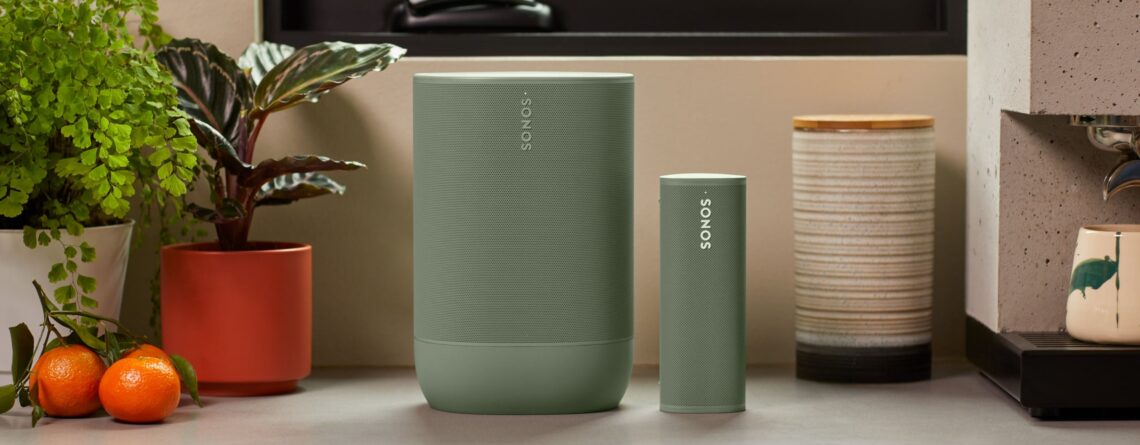
On one end is the ultra-portable Sonos Roam 2, which packs size-defying sound into its compact, lightweight design. On the other end is Sonos Move 2, our most powerful portable speaker, complete with a precision-tuned woofer that delivers rich bass and full-range stereo sound wherever you take it. And filling out the middle is the remarkably versatile Sonos Play, with its pitch-perfect balance of compact size and bass-heavy stereo sound.

So, which Sonos portable speaker is right for you? Depending on where and how you listen, the answer could very well be “all of the above.” But each speaker has its particular strengths, so we’ve put together this guide to help you choose the best portable companion for you.

Shared capabilities across all Sonos portable speakers

Though each of the three Sonos portable speakers caters to a unique listening case, they share several key features.

For example, all three showcase our commitment to sustainability through their energy-saving design and thoughtfully designed packaging that eliminates virgin plastic. And all three look as sophisticated as they sound, transitioning seamlessly between indoor and outdoor aesthetics.

Other shared capabilities include:

  • Robust weatherproofing. All Sonos portable speakers are durable enough to stand up to outdoor use. Roam 2 and Sonos Play are both rated IP67, which means they’re dustproof and can even withstand temporary immersion in water. Move 2 is rated IP56, which means it can handle dust, dirt, and getting sprayed by the hose or caught in the rain.
  • Sonos system integration. Using WiFi, you can connect any Sonos portable speaker to your at-home Sonos system for a multi-room audio setup when you’re not on the go.
  • Automatic Trueplay™ tuning. All three speakers feature built-in Trueplay™ technology that automatically analyses the unique acoustics of a space and optimises the speaker’s EQ to improve your listening experience.
  • Three options for connectivity. Connect any Sonos portable speaker via WiFi, Bluetooth, or Apple AirPlay.
  • USB-C charging. All three speakers can be charged via USB-C. Sonos Play and Move 2 also feature an included wireless charging base, while Roam 2 has a wireless Qi charging base that can be purchased separately.

Read more...

WiFi vs. Bluetooth Speakers: Key Differences Explained

At a high level, WiFi and Bluetooth speakers do the same thing — they connect to a remote device to play audio without a wired connection. But these two wireless technologies work in fundamentally different ways, and these differences can affect everything from their range and audio quality to their compatibility with other devices.

If you came here looking for a definitive ‘winner’ between WiFi and Bluetooth technologies, you’ll find the reality is more nuanced. Each technology has its advantages (which explains why many Sonos products feature both capabilities). WiFi excels at streaming lossless audio thanks to its greater bandwidth, while Bluetooth is generally more portable.

In this guide, we’ll pinpoint what separates WiFi and Bluetooth so you can find the technology that best fits your audio experience.

How do WiFi and Bluetooth connect to wireless devices?

Both WiFi and Bluetooth speakers use radio waves to transmit audio to wireless devices. They just do it in distinct ways.

WiFi speakers connect to a wireless internet network, like the one you have in your home. One advantage of a wireless network is that it can handle a large amount of data transmitted over multiple devices at once. This allows for high-quality, lossless audio streaming to your speaker even if your phone, laptop, and other devices are simultaneously using the same network.

Bluetooth speakers, on the other hand, create a direct wireless connection between the speaker and the music-playing device. Think of it as a one-to-one, short-range radio signal — no internet network or router required. Pairing your Bluetooth-enabled device with a Bluetooth speaker can usually be done with one click. This means Bluetooth is generally quicker to set up than WiFi, though this approach also limits its range and audio quality.

So, it’s clear that WiFi and Bluetooth aren’t the same. But which is better? It depends on the specific dimensions and qualities that matter most to you.

Portability

Bluetooth doesn’t require an internet connection or wireless network, so it’s generally the more portable technology. If you wear your Sonos Ace headphones on your commute or take your Sonos Play to a barbecue in the park, you’re almost certainly using Bluetooth technology to connect your devices.

Another plus in terms of portability is that Bluetooth speakers tend to have a longer battery life than WiFi speakers. A Bluetooth connection uses less power to transmit data, prioritising energy efficiency over other areas where WiFi wins out, like speed and bandwidth.

While they can be just as compact and lightweight as Bluetooth speakers, WiFi speakers require a wireless network connection to function. This limits where you can use them. Before you bring a WiFi speaker over to a friend’s house or outside gathering, make sure there’s a reliable internet connection you can use to connect your devices.

Of course, many portable speakers can connect via Bluetooth and WiFi. It’s less about choosing the right speaker and more about choosing the right type of connection for each situation.

Read more...