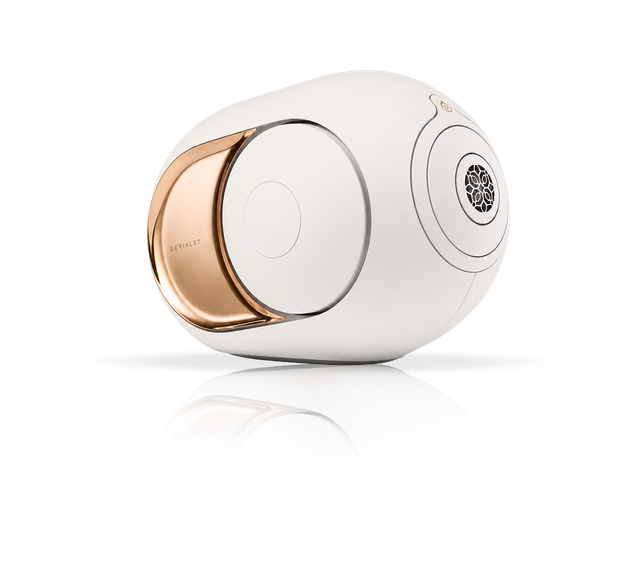


Bang & Olufsen Beolab 50: Sculptural Sound for the Modern Living Room

A pair of high-end active loudspeakers rarely comes cheap. When you spend upward of $40,000 on audio equipment, you usually have to budget another $10,000 to $20,000 for external amplification and digital-to-analog converters. The Bang & Olufsen Beolab 50 eliminates that hidden cost by handling all amplification and D/A conversion on board. It is a sculptural, high-end active loudspeaker designed to deliver powerful, room-adaptive audio for the modern living room, blending timeless aesthetic design with uncompromising acoustic performance.
What Is the Bang & Olufsen Beolab 50?
The Bang & Olufsen Beolab 50 is a high-end powered speaker that blends best-in-class audio technology with graceful aesthetics. It provides uncompromising sound quality and absolute versatility for audiophiles who expect something truly extraordinary from a luxury floor standing speaker.
You do not buy the Bang & Olufsen Beolab 50 if you just want background noise. You buy it because your living room dictates both a visual statement and a sonic fortress. According to Andrew Robinson, who reviewed the speakers in an October 2025 video, the Beolab 50 is "the speaker I've been waiting for." His testing process included connecting the speakers to a Beosound Theatre and Bang & Olufsen Beoconnect Core, pushing them with tracks from Fiona Apple and Tool to evaluate their dynamic range.
A Sculptural Sound Solution for the Modern Living Room
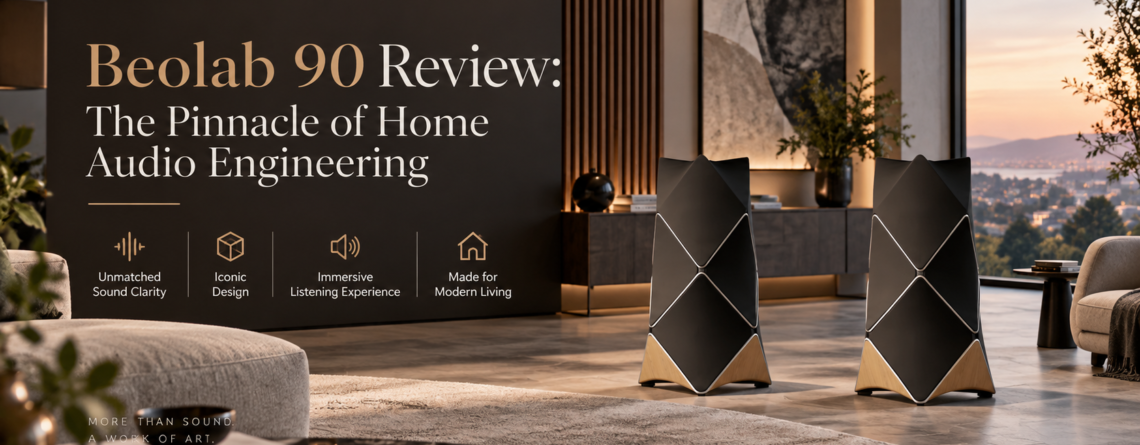
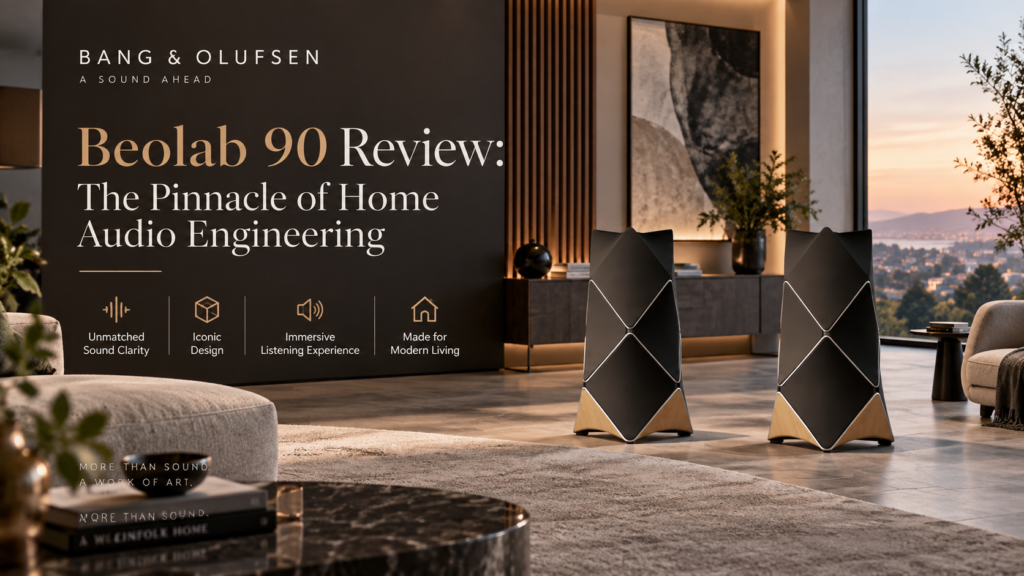
The visual design of the Bang & Olufsen Beolab 50 rejects the traditional monolithic black box. Instead, it offers a striking silhouette that immediately draws the eye. The top of the cabinet features an acoustic lens that physically deploys when the speaker powers on, a mechanical movement that signals the start of a listening session. It functions as a piece of functional art when not in use, integrating into modern interior design without looking like a piece of recording studio equipment.
Key Design and Acoustic Engineering Features
The engineering of the Bang & Olufsen Beolab 50 focuses on precise driver integration and active amplification.
- Acoustic Lens Technology: The top-mounted lens deploys physically to control high-frequency dispersion.
- Active Speaker Design: Built-in amplification and D/A conversion eliminate the need for external amps.
- Custom Finishes: Users can select from natural aluminum, black anthracite, and various wood side panels.
Because the Bang & Olufsen Beolab 50 handles its own digital signal processing, it maintains strict control over the drivers. This ensures that the sound reaching your ears matches the sound the engineers intended, rather than being altered by third-party amplifiers or inferior cables.
How Does Adaptive Bass Linearisation Work in the Beolab 50?
Adaptive bass linearisation works by continuously monitoring the low-frequency output and adjusting the DSP engine to prevent driver distortion at high volumes. This specific technology, known as an adaptive bass linearisation speaker system, ensures the woofers move accurately even when the audio demands sudden, intense bursts of deep bass.
The Bang & Olufsen Beolab 50 relies on a custom DSP engine to manage this heavy lifting. When you push the volume up, the internal software instantly calculates the physical limits of the drivers. It adjusts the bass response in real-time to keep the sound clean. You get the full weight of a bass drop without the mechanical rattling or distortion that plagues standard passive speakers.
Understanding the Custom DSP Engine
Digital signal processing sits at the heart of the Bang & Olufsen Beolab 50. The DSP engine manages everything from crossover points to phase alignment and time correction. According to a discussion on the Audio Science Review forum, the active nature of these speakers means they handle D/A conversion internally. This integrated approach allows the DSP to correct physical driver anomalies before the signal ever reaches the amplifiers. The result is a tightly controlled soundstage that remains stable across different volume levels.
The Role of Active Room Compensation
Even the best speaker sounds terrible in a poorly treated room. Hard walls, glass windows, and bare floors create standing waves that ruin low-frequency response. The Bang & Olufsen Beolab 50 tackles this with Active Room Compensation.
This feature measures the acoustic properties of your specific room. It then alters the speaker's output to counteract the negative effects of your environment. If you move the Bang & Olufsen Beolab 50 closer to a wall, the system detects the resulting bass boost and flattens the response curve. The speaker adapts to the space, rather than forcing you to rearrange your furniture.
Why Is Bang & Olufsen Considered a Luxury Floor Standing Speaker?
Bang & Olufsen earns its luxury status through meticulous material selection, high-end acoustic engineering, and a design language that prioritizes visual permanence. The Bang & Olufsen Beolab 50 exemplifies this approach by combining raw acoustic power with mindfully selected materials that create a statement piece for any audiophile space.
A luxury floor standing speaker must do more than just play loud. It needs to look like a permanent, intentional fixture in a high-end home. The Bang & Olufsen Beolab 50 achieves this by offering a modular aesthetic that buyers can customize. You choose the visual identity of the speaker to match your interior, ensuring it never looks out of place.
Premium Materials: Natural Aluminum, Oak Wood, and Fabric
The construction of the Bang & Olufsen Beolab 50 relies on premium, durable materials. The primary cabinet structure uses natural aluminum, which provides a rigid acoustic enclosure that resists vibration. The side panels offer a choice of wood finishes, including dark smoked oak, which adds warmth to the otherwise industrial metal exterior. The front cover consists of a tight fabric that hides the internal drivers while allowing sound to pass through unimpeded. According to the manufacturer, this combination of aluminum, oak wood, and fabric creates a timeless design that fits seamlessly into modern living rooms.
Comparing the Beolab 50 to the Flagship Beolab 90
The Bang & Olufsen Beolab 50 borrows heavily from the flagship Beolab 90. According to a user on the Audio Science Review forum who had heard both, the Beolab 90 received excellent reviews, and the 50 incorporates many of those trickled-down technologies.
However, the Beolab 50 scales the concept down. The Beolab 90 serves as the ultimate, no-compromise reference speaker, utilizing more drivers and a larger cabinet to push even higher sound pressure levels. The Bang & Olufsen Beolab 50 takes the core concepts of active room compensation and acoustic lens technology and packages them into a more manageable footprint for a standard living room. It delivers 80% of the flagship's performance in a form factor that actually fits in a home.
What Is the Beolab 50 Price in India and Global Markets?
The Bang & Olufsen Beolab 50 carries a premium price tag that reflects its active amplification, custom DSP, and luxury build. In European markets, the Bang & Olufsen website lists the speakers at €62,300 per set. For buyers in India, the Beolab 50 price India falls into the ultra-premium audiophile tier, with specialized retailers like Ooberpad listing the floorstanding speaker for import.
Pricing for the Bang & Olufsen Beolab 50 changes based on the specific finishes and wood panels you select. Because it includes all necessary amplification and digital-to-analog conversion, the sticker price represents your total system cost. You do not need to buy a separate preamp or power amplifier to reach peak performance.
Understanding the Premium Pricing of Bang & Olufsen
Why is Bang & Olufsen so expensive? The cost stems from the research and development required to integrate complex digital signal processing with bespoke acoustic hardware. A user on the Audio Science Review forum pointed out that people who buy $40,000 speakers usually spend another $10,000 to $20,000 on external amplification, DACs, and high-end cables. The Bang & Olufsen Beolab 50 bundles all of this into the cabinet. You are paying for a complete, self-contained audio system that has been tuned at the factory, rather than a single component that requires further investment to function.
Is Bang & Olufsen Better Than Bose for High-End Audio?
Is Bang & Olufsen better than Bose? For high-end, dedicated listening rooms, the Bang & Olufsen Beolab 50 easily outperforms Bose. Bose excels at mass-market convenience, lifestyle soundbars, and noise-canceling headphones. The Bang & Olufsen Beolab 50 targets a completely different consumer. It provides a discrete, two-channel stereo experience with active room compensation and acoustic lens technology that Bose simply does not offer in its product lineup. If you want a lifestyle speaker for casual TV viewing, Bose serves the purpose. If you want a sculptural sound solution that reveals the exact placement of every instrument in a mix, the Bang & Olufsen Beolab 50 wins outright.
How Does the Beolab 50 Perform in a Real Listening Room?
In a real listening room, the Bang & Olufsen Beolab 50 produces a wide, stable stereo image that remains consistent even when you stand up or move to the side. The acoustic lens technology controls high-frequency dispersion, preventing harsh reflections from nearby walls and ensuring the sound reaches the listener with pinpoint accuracy.
Andrew Robinson noted in his 2025 review that the speakers excel at low-volume listening. Many high-end speakers only sound alive when pushed to high decibel levels. The Bang & Olufsen Beolab 50 utilizes its adaptive DSP to maintain bass response and detail even at background volumes. You hear the full mix without shaking the walls.
Stereo Imaging and Acoustic Lens Dispersion
The Acoustic Lens Technology on the Bang & Olufsen Beolab 50 physically alters how high frequencies leave the cabinet. When the lens deploys, it spreads the high frequencies horizontally across the room rather than beaming them straight forward. This creates a much wider sweet spot. You do not have to sit perfectly centered between the two speakers to hear a balanced mix. The soundstage extends beyond the physical boundaries of the speakers, making the room feel larger than it is.
Integration with Modern Home Theater Setups
The Bang & Olufsen Beolab 50 functions brilliantly in a modern home theater. Robinson tested the speakers alongside a Beosound Theatre, using them as front left and right channels. Because they are active speakers, they connect directly to the source via digital inputs, bypassing the need for a traditional AV receiver's amplification stage. The Bang & Olufsen Beolab 50 handles the heavy dynamic demands of movie soundtracks effortlessly, delivering deep bass impacts and crisp dialogue with equal clarity.
Is the Bang & Olufsen Beolab 50 the Right Investment for Your Home?
The Bang & Olufsen Beolab 50 is the right investment if you want a complete, self-contained audio system that doubles as a piece of modern art. It eliminates the need for external amplifiers, DACs, and complex cable management, making it ideal for buyers who want flagship sound without dedicating an entire room to rack-mounted audio gear.
You should buy the Bang & Olufsen Beolab 50 if you value both acoustic accuracy and industrial design. The Active Room Compensation ensures the speaker sounds excellent regardless of your room's dimensions, and the adaptive bass linearisation keeps the low end tight and controlled. It is a speaker for someone who wants to hear the music exactly as recorded, without compromising the visual aesthetic of their living space.
Who Should Buy the Beolab 50?
The ideal buyer for the Bang & Olufsen Beolab 50 is an audiophile who has outgrown traditional passive speaker setups. If you are tired of matching amplifiers, experimenting with different DACs, and dealing with heavy speaker cables, this active system solves those problems. It also appeals to interior design enthusiasts who refuse to place large, black monolithic boxes in their living rooms. The customizable aluminum and oak wood finishes allow the speaker to blend into high-end architecture.
Alternative High-End Speakers to Consider
If the Bang & Olufsen Beolab 50 does not fit your specific needs, consider a few alternatives. The flagship Beolab 90 offers even greater dynamic range and driver count for a higher price. If you prefer traditional passive speakers, the Wilson Watt/Puppy or the Arendal 1528 Tower provide massive sound but require massive external amplification. Finally, if you want a smaller active speaker for a tighter space, the Bang & Olufsen Beolab 28 offers similar smart features in a more compact form factor.
The Bang & Olufsen Beolab 50 stands as a unique intersection of engineering and art. If you are ready to elevate your listening room with a sculptural sound solution, the Sera Casdim team is here to help you configure the perfect set.
Key Takeaways
- The Bang & Olufsen Beolab 50 is an active loudspeaker that eliminates the need for external amplifiers or DACs.
- Adaptive bass linearisation and Active Room Compensation adjust the sound to fit your specific room and volume levels.
- The sculptural design features customizable natural aluminum and oak wood side panels to match modern interiors.
- The Beolab 50 delivers roughly 80% of the flagship Beolab 90's performance in a more manageable footprint.
Comparison
| Feature | Bang & Olufsen Beolab 50 | Bang & Olufsen Beolab 90 |
| Speaker Type | Active floor standing speaker | Flagship active reference speaker |
| Amplification | Built-in amplification and D/A conversion | Built-in amplification and D/A conversion |
| Key Technology | Acoustic Lens Technology, Active Room Compensation | Active Room Compensation, larger driver array |
| Cabinet Design | Natural aluminum with smoked oak wood panels | Larger cabinet for higher sound pressure levels |
| Ideal Environment | Standard modern living rooms | Dedicated, no-compromise listening spaces |
Frequently Asked Questions
1. What is the price of the B&O Beolab 50?
The Bang & Olufsen Beolab 50 carries a premium price tag reflecting its active amplification and luxury build. In European markets, the manufacturer lists the speakers at €62,300 per set. For buyers in India, the Beolab 50 price India falls into the ultra-premium audiophile tier through specialized import retailers.
2. Why is Bang Olufsen so expensive?
The cost stems from integrating complex digital signal processing with bespoke acoustic hardware. Traditional high-end setups require separate external amplifiers and DACs, but the Beolab 50 bundles this technology inside the cabinet. You are paying for a complete, factory-tuned audio system rather than a single passive component.
3. Is Bang & Olufsen better than Bose?
For dedicated high-end listening rooms, Bang & Olufsen easily outperforms Bose. While Bose excels at mass-market convenience and lifestyle soundbars, the Beolab 50 provides a discrete two-channel stereo experience with active room compensation and acoustic lens technology that Bose simply does not offer.
4. How does adaptive bass linearisation work in the Beolab 50?
Adaptive bass linearisation continuously monitors low-frequency output and adjusts the custom DSP engine to prevent driver distortion at high volumes. This ensures the woofers move accurately during sudden, intense bursts of deep bass, maintaining a clean sound without the mechanical rattling that plagues standard passive speakers.
5. What makes the Beolab 50 a luxury floor standing speaker?
The Beolab 50 earns its luxury status through meticulous material selection, including natural aluminum, smoked oak wood, and tight fabric. It functions as a visual statement piece and a sonic fortress. The customizable design ensures it looks like an intentional, permanent fixture in a high-end living room rather than recording studio equipment.